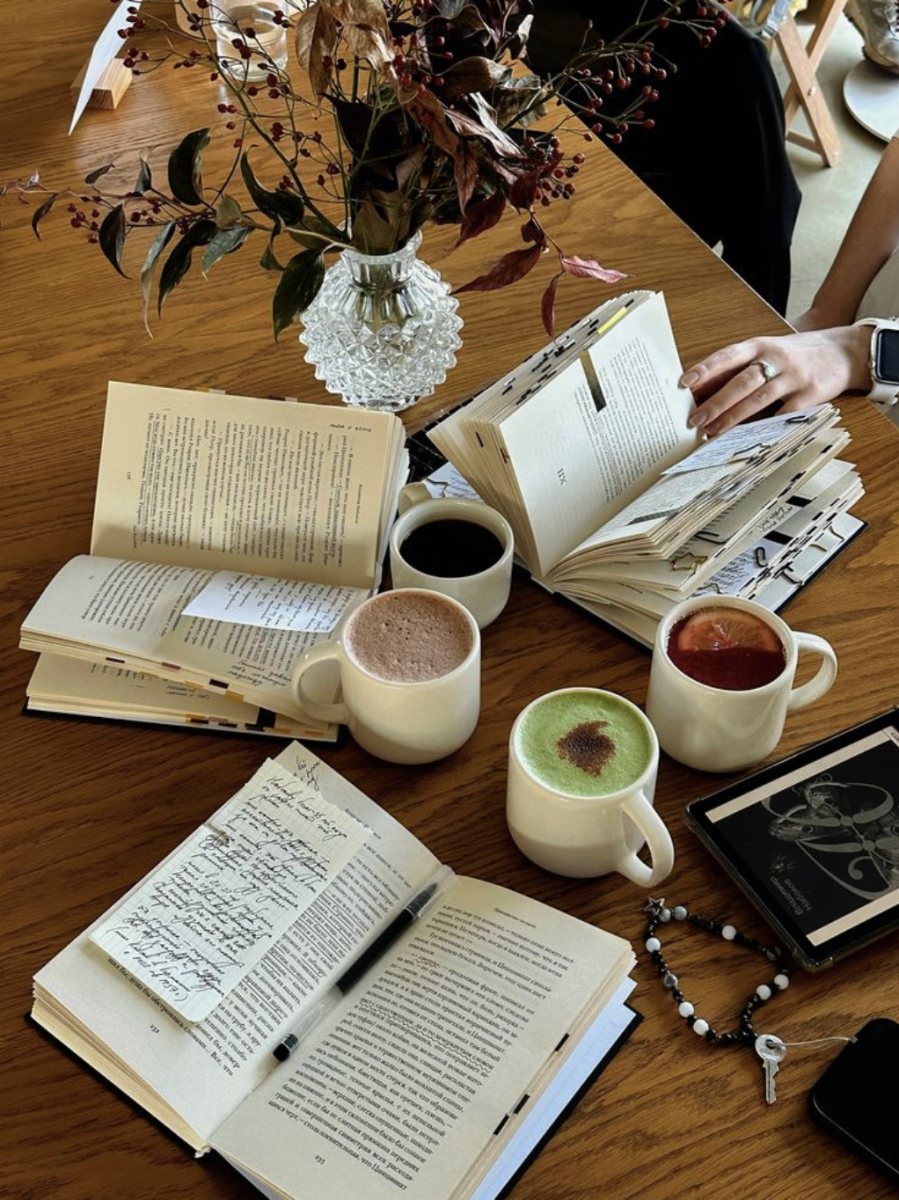
Can you read every book that is on your bookshelf?
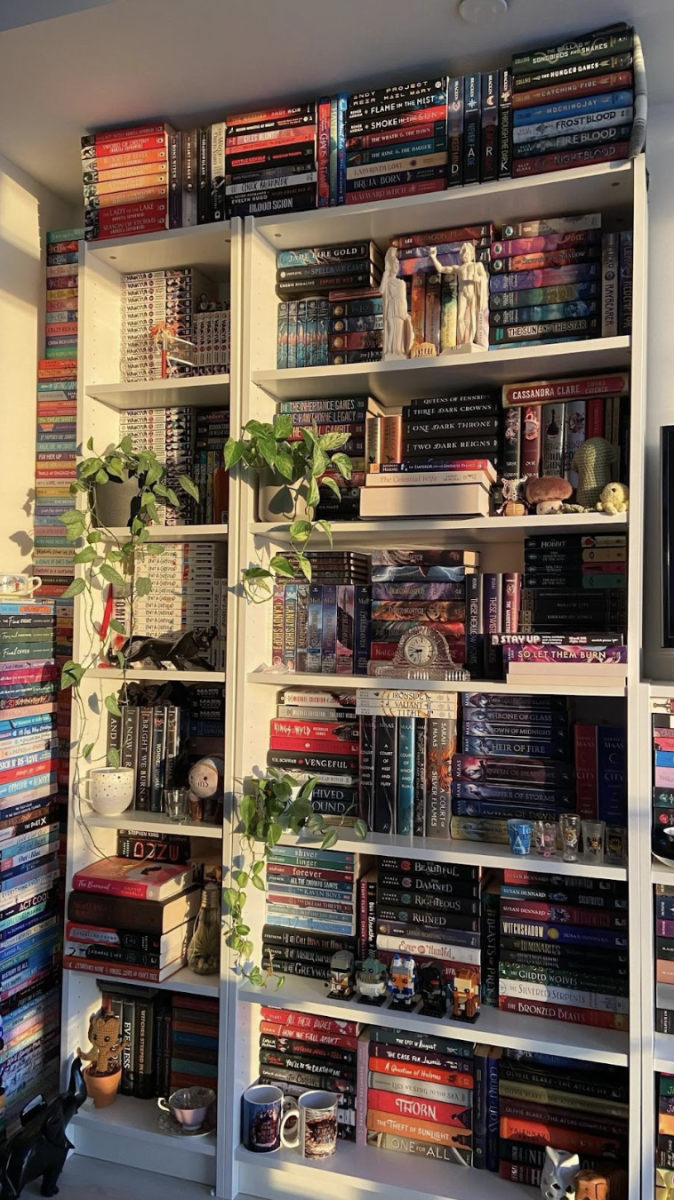
If you read 25 books per year, but have a BookTok-worthy shelf of 400 novels, it will take you 16 years to read through your TBR. That is only if you do not impulsively buy five more this weekend.
Research shows that the number of books being purchased is generally increasing. However, the number of people who read has decreased. What does this data look like in action?
On the off chance that you, dear reader, ingest every word of every book you purchase, congratulations. You are rare. But inside your favorite bookstore or library, there exist individuals who value obtaining appearances over retaining information.
I would know. As a 7-year-old with her mother’s library card, I checked out at least five books at a time each visit. I never finished them by the time they were due back. The rush of possibilities was never enough to motivate me to dedicate myself to even the best of children’s literature.

This rush, the addictive feeling of carrying a multitude of books in my arms, followed me into adulthood. My mother’s library card turned into my very own credit card, and I traded my small-town library for the Baton Rouge Barnes & Noble. But responsibility restrained me. While I picked up more than 10 books off the shelves in a single visit, my budget forced me to take only one home at a time.
I milked the letters upon the pages for all they were worth, aiming to sustain my reading until the next paycheck. Because of this restrained practice, I’ve maintained a slow consumption lifestyle. My physical TBR is one. Well, and one half if you count the unfinished “Ulysses” by James Joyce. For me, that book will have to be taken in bite-sized portions over time.
Still, part of me wonders if there is any value in having a large, physical collection of unread books.

A specific Japanese word, “tsundoku,” describes the phenomenon of “buying a lot of books and keeping them in a pile because you intend to read them but have not done so yet.” Vogue India writer Asma Siddiqui explained that for her, this is “an act of faith, a decision made for the imagined future self armed with the time and readiness required to read that certain book.”
For Suiddiqui, the unread books exist as a symbol of who she wanted to be at the time she purchased them. A reflection in the mirror of who she always has been. Even so, her guilt towards untouched covers lingers.
Hyper-consumption has likely driven all of us at some point in our lives. Over the last two decades, social media has grown. Through it, we’ve each caught a glimpse of what could be. Who we could become.
Some of us readers want to perceive ourselves (and be perceived by others) as intellectuals, dedicated and introspective. Yet, the cost of becoming those things is not as easy as hitting “add to cart” and “place order”. The cost is a different currency entirely.
Time.
Is that something you’re willing to give to narrow down your TBR list? Let’s give it a shot together. Only 10-30 minutes at a time. I challenge you to put your purchasing on hold until you’ve absorbed every last book at your disposal.
Let’s choose to stop dreaming about what we want to become, and instead, do what it takes to become it.