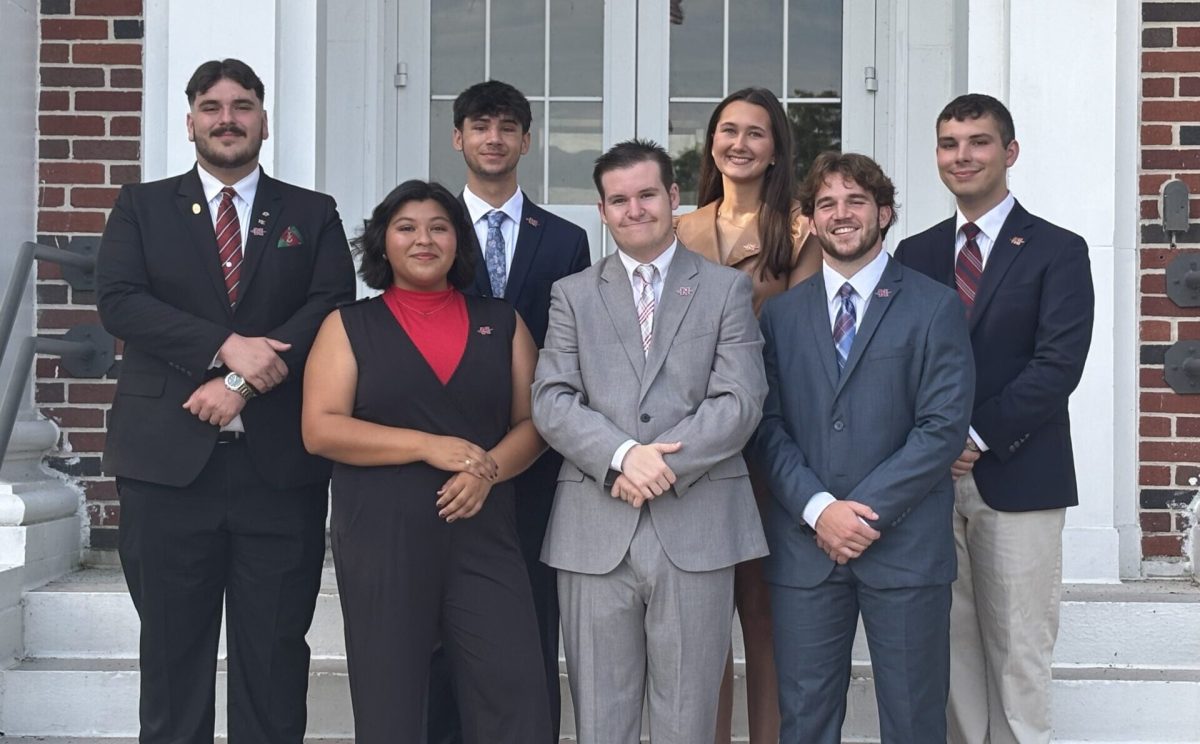
The two-year-long search for a Bridge to Independence Senator concluded this spring as Nicholls’ Student Government Association appointed Gabriel Hunter, a sophomore education major, to enter the role.
For SGA President Cruz Cassard, the appointment represents more than simply filling a vacancy.
The position, created to give Bridge students representation on the SGA floor, had remained open for two years as the organization searched for the right candidate. In the past, the role was held by tutors or mentors connected to the program, not by the Bridge students themselves.
“This is one of the first times that the position is held by someone who is actually in the program rather than being a tutor or mentor,” Cassard said.
“We are definitely excited for the work of the new Bridge to Independence Senator to begin.”
Hunter set out on his college career at Nicholls in fall 2024 and quickly found a sense of belonging through the Bridge program, which supports students with disabilities in their transition to college life.
“I love that Bridge is for people like me who have disabilities,” Hunter said. “It creates a welcoming environment.”
Each week, Hunter works one-on-one with mentors in the program to build academic and life skills while forming close connections. Now, his circle of collaboration is expanding beyond Bridge.
“It feels encouraging to be appointed as senator,” Hunter said. “This is a bigger opportunity. Now I get to work with a team.”
As senator, Hunter plans to maintain close communication with Bridge Director Julie Folse to ensure students’ needs and concerns are represented in SGA discussions. His appointment, Folse said, is a meaningful step toward stronger inclusion across campus.
“Gabriel’s appointment represents an important opportunity for Bridge students to have a voice within student leadership,” Folse said. “This will further strengthen the connection between Bridge and the broader campus community.”
For the Bridge program, the appointment signals progress. For Hunter, it is a chance to serve. For Nicholls, it marks a move toward broader representation, ensuring more students will see themselves reflected in campus leadership.