Americans have debated gun control laws since the founding of our country.
Because of this, whether in favor of or opposed to it, many people can easily recite the Second Amendment of the Constitution.
“A well regulated Militia, being necessary to the security of a free State, the right of the people to keep and bear Arms, shall not be infringed.”
Let’s take a look at the Federalist Papers to further understand why our Founders thought the idea of “Militia” and constitutional protection were important.
“They must be told that the ultimate authority…resides in the people alone, and that it will not depend merely on the comparative ambition or address of the different governments,” James Madison wrote in The Federalist Papers: No. 46.
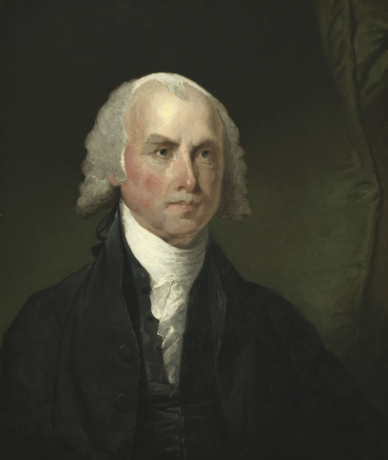
Within this document, Madison explored the possible number of armed, trained military personnel compared to armed, untrained citizens. One underlying concern of his writings, and Alexander Hamilton’s writings, was the ability of the American people to defend themselves against a tyrannical government.
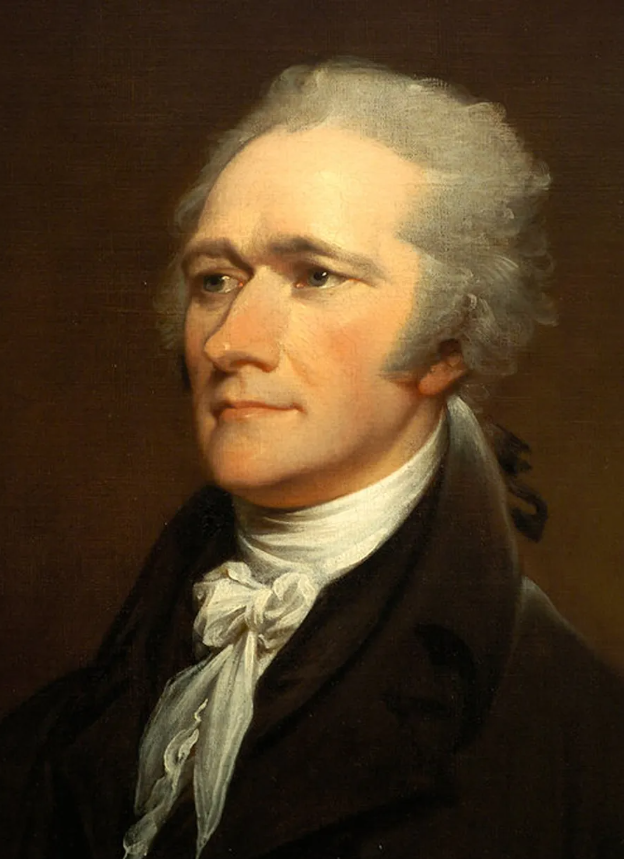
In The Federalist No. 29, Hamilton said that even a large federal army would not threaten liberty so long as citizens remained armed and trained.
“If circumstances should at any time oblige the government to form an army of any magnitude that army can never be formidable to the liberties of the people while there is a large body of citizens, little, if at all, inferior to them in discipline and the use of arms, who stand ready to defend their own rights and those of their fellow-citizens,” Hamilton wrote.
In other words, the Second Amendment is about the balance of power. A final safeguard against government overreach.
The argument for the right to bear arms to resist tyranny has been echoed by many political commentators for years. Including deceased conservative commentator, Charlie Kirk.
“The Second Amendment is there, God forbid, so that you can defend yourself against a tyrannical government,” Kirk said. “And if that talk scares you — ‘wow, that’s radical, Charlie, I don’t know about that’ — well then, you have not really read any of the literature of our Founding Fathers.”
While answering that same question, not long after, Kirk commented on gun deaths per year and said it is “worth to have a cost of, unfortunately, some gun deaths every single year so that we can have the Second Amendment to protect our God-given rights.”
Last year on Sept. 10, he died of a gunshot wound.
What does this look like in practice? When a government becomes tyrannical, exerting its power cruelly against its people, how do the people fight back?
Can they fight back?
On Jan. 24, Alex Pretti, an intensive care nurse at the Minneapolis Veterans Affairs hospital, recorded footage as a small group of protesters spoke to federal agents. Other bystanders’ recordings show Pretti being dragged to the ground and shot 10 times by the federal agents.
For a more comprehensive breakdown of what transpired according to video evidence, click here.
Here are some observations we can make using the recordings of bystanders. Pretti held no gun in his hands. He did have a firearm located somewhere on his body. But Pretti did not draw his gun. Instead, the federal agents seemingly beat him, stripped him of his firearm once they found it and killed him moments later.
Pretti’s death did not appear to be an isolated accident. It was one of several killings since the beginning of President Trump’s second administration. Renee Good was shot and killed by a federal agent on Jan. 7. Silverio Villegas Gonzalez was shot and killed in his vehicle after dropping his kids off at school on Sept. 12, 2025.
Not to mention that at least 32 people have died inside detention centers over the last year, according to The Guardian. 2025 held the highest death rate in detention centers since 2004.
What the Founders feared, a tyrannical government willing to kill its people, is no longer a hypothetical.
Pretti was abiding by his Second Amendment right—the same right that the Founding Fathers established to protect him from a tyrannical government. That right did not protect him. It was taken from Pretti by law enforcement before they killed him on the street.
There is, of course, one legal caveat to this situation. Law enforcement can legally take away a civilian’s firearm in Minneapolis if they are deemed dangerous.
Put yourself in the shoes of a judge. Review the raw footage, all different angles, and decide if you would have reasonable grounds to believe that Pretti posed a threat.
What now?
How will public opinion on law enforcement escalate, and how many more encounters like this will follow?
We don’t know.
Perhaps the right to bear arms was never solely about the type of weapon in your hands. Instead, it was meant to embody something larger. The right of the American people to protect themselves against potential abuse from their government, should they need it.
And right now, it appears as though they do.