Lindsay Pellegrin works weekdays as the administrative coordinator for the Mass Communication Department at Nicholls State University, but shows up every day as a mother to a set of 7-year-old twin boys.
“We just had to rely on government assistance,” Pellegrin said, “and I’m not ashamed of it.”
As many federal agencies and employees faced challenges during the nation’s shutdown, so did federally funded programs such as the Special Supplemental Nutrition Program for Women, Infants and Children (WIC).
“WIC is essentially one of the biggest programs that helped me finish college,” Pellegrin said.
With her husband working as a commercial fisherman, Pellegrin had little help and stayed home with the children.
At the time, Pellegrin in her early 20s, became pregnant and received WIC up until her children’s fifth birthday.
“I could go to school, and my husband didn’t have as much burden on his plate to how he was going to provide for his family,” she said.
Since its inception in 1975, WIC has helped millions of Americans finance the cost of parenthood.
WIC provides specific foods for pregnant women, new mothers, infants and Children.
Many expenses come with parenthood and WIC has helped thousands of families.
“I’ve worked at the health unit, so I’ve seen it from a workers’ standpoint what these families go through with the expense of formulas,” said Pellegrin.
WIC supplies breast pumps to breastfeeding mothers and money for groceries such as formula, milk, eggs, bread, cheese, fruits and vegetables.
“Our health unit in Thibodaux sees about 1000 families a month that receive WIC,” said Tiffany Adams, a Louisiana Department of Health nutritionist.
As many Louisiana residents rely on WIC, the government shutdown doesn’t affect that for now.
“No, for Louisianians I believe the funding is secure for us, based on the things I’ve read we have the funding here,” said Adams.
As WIC secures funding throughout the state, residents raise concerns about food stamps coming to a halt.
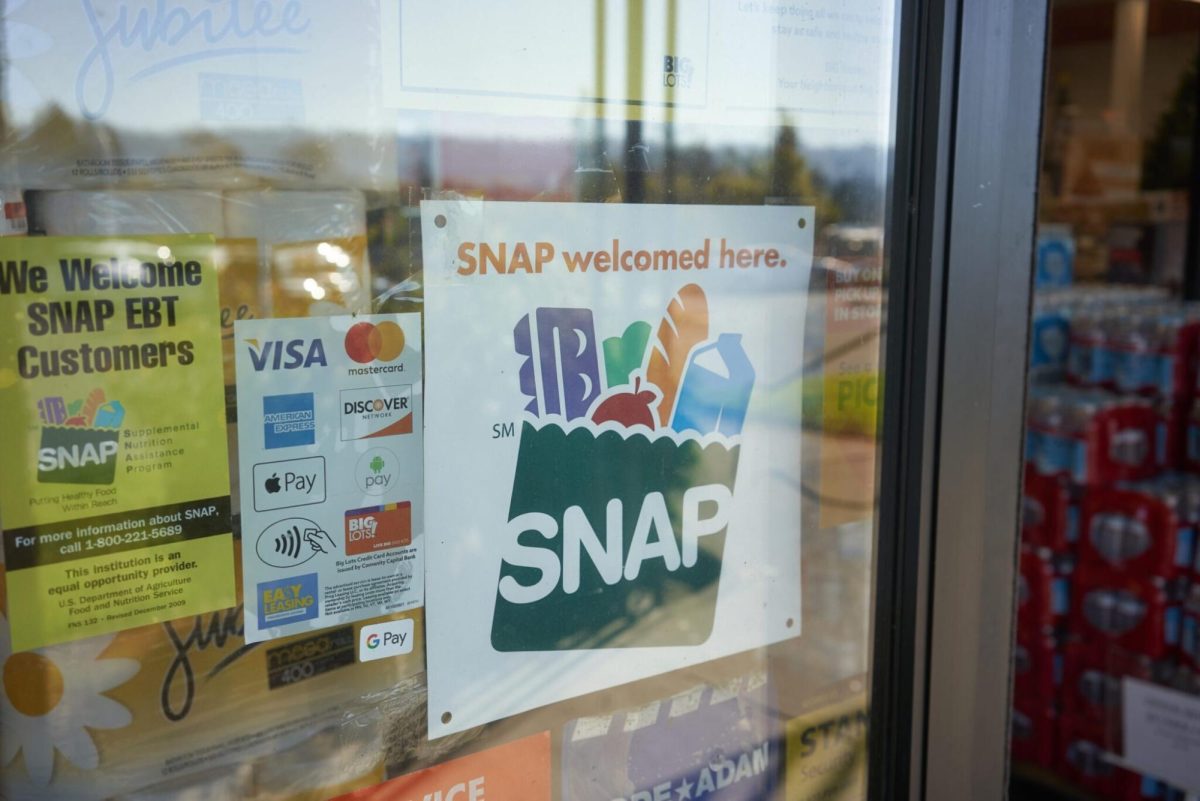
Although WIC and the Supplemental Nutrition Assistance Program (SNAP) are both federally funded programs, they differ in assistance.
SNAP provides monthly funds for a variety of foods based on household income.
“My kids and I have been using food stamps for several years and it has been a huge help since I am a single mother,” said Alicia Caine.
Caine works two jobs as a certified nurse assistant (CNA) and raises three sons ages 12, 7, and four.
On Oct. 23, Caine received a LDH text message alert stating, “SNAP benefits will not be uploaded to your card starting Nov. 1. Any remaining SNAP benefits on your card from previous months can still be used.”
“I wasn’t expecting anything,” said Caine.
Caine received another LDH alert Oct. 31 stating on Nov. 1 she will receive temporary state funded assistance.
This will include 25% of her monthly allotment on the assigned date that SNAP benefits are normally issued to her card, and 25% issued each week until the federal SNAP funds are available.
“I’m quite appreciative for getting something,” said Caine. “Anything is better than nothing.”